Sample report package

Show parents the numbers without losing the conversation.

MyopiaTracker turns axial-length data into clear parent-facing reports and concise clinical justification summaries for the chart.

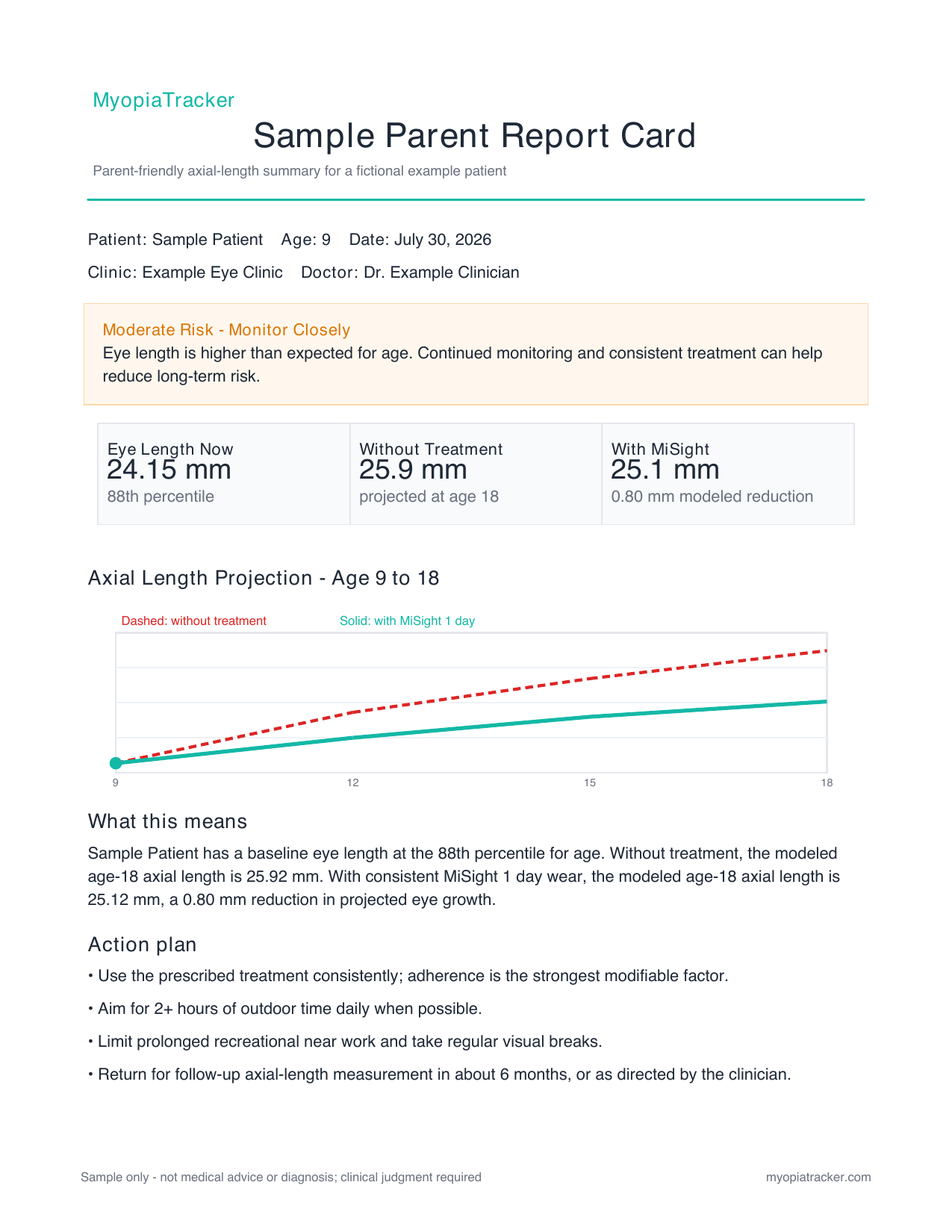
Preview of a MyopiaTracker parent report card

Parent Report Card

A parent-friendly report that explains current axial length, risk context, projected growth, treatment scenario, and practical next steps.

  • Plain-language axial-length explanation
  • Current vs projected age-18 comparison
  • Treatment scenario summary
  • Family action plan and follow-up framing
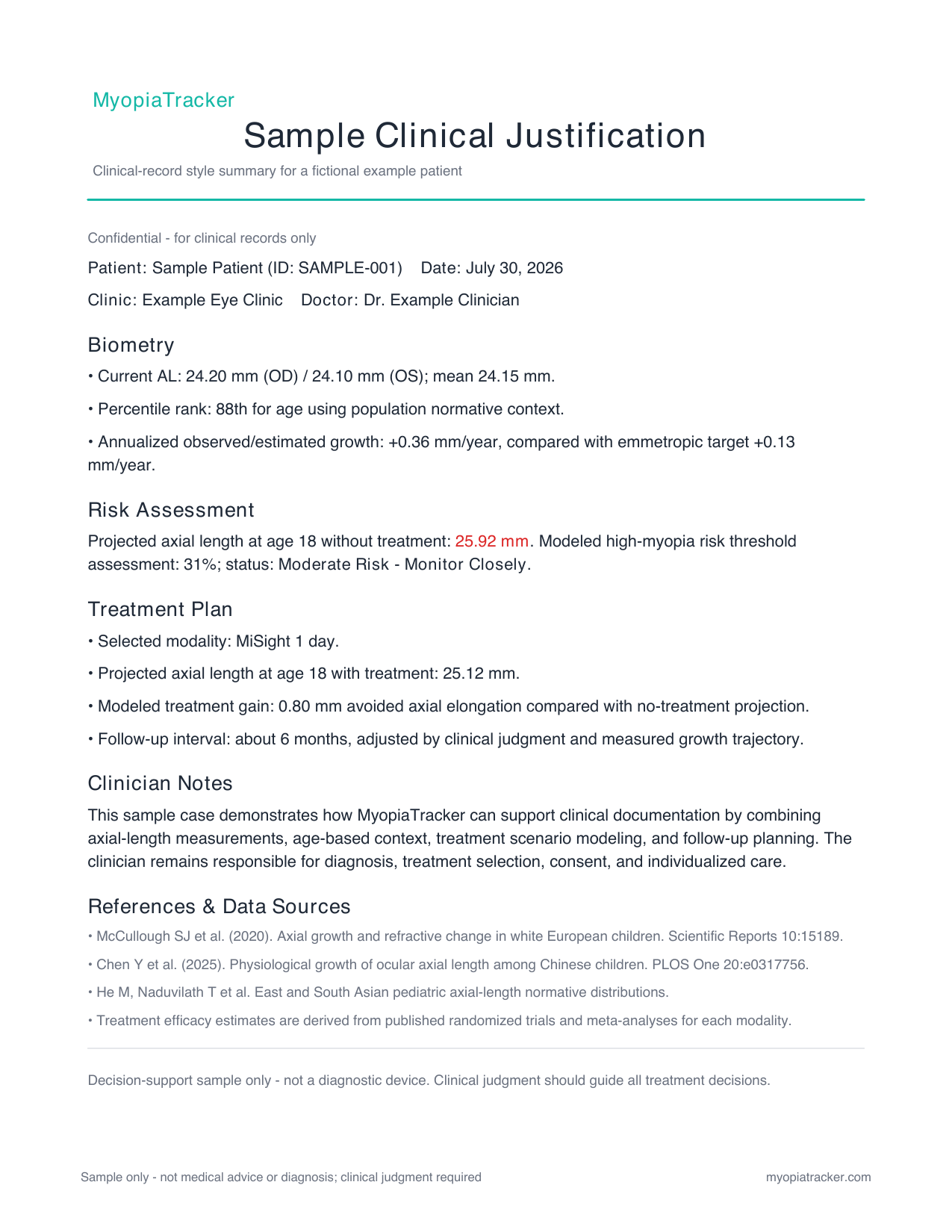
Preview of a MyopiaTracker clinical justification report

Clinical Justification

A clinician-facing summary for documentation: biometry, percentile context, treatment plan, modeled risk, notes, references, and decision-support disclaimer.

  • OD/OS axial-length and mean AL summary
  • Risk context and percentile framing
  • Treatment plan and modeled gain
  • References and clinical judgment disclaimer

Why these reports matter

Myopia management often fails at the communication layer. Parents may hear “axial length,” “percentile,” “progression,” and “treatment efficacy” without a clear mental picture of what those numbers mean for their child.

MyopiaTracker helps clinicians turn measurements into a more structured conversation: where the child is now, why growth matters, what treatment is trying to change, and when follow-up should happen.

For parents

The report makes the visit easier to understand and easier to remember after leaving the clinic.

For clinicians

The clinical summary helps document the reasoning behind monitoring, treatment discussion, and follow-up planning.

Generate reports from your own cases

Start a 14-day Pro trial, enter a patient visit, compare treatment scenarios, and generate parent-ready reports from real axial-length data.

These are fictional sample reports for educational and marketing review. MyopiaTracker is clinical decision support, not a diagnostic device. Reports do not replace clinical judgment, diagnosis, informed consent, or individualized treatment planning.